
Measurements
/Flow
Explore the benefits and drawbacks of using orifice plates for flow measurement, including cost, size, accuracy, sensitivity, and head loss.
2 min read
Advertisement
Table of Contents
This article explores the advantages and disadvantages of using flow nozzles for fluid flow measurement. We’ll delve into their benefits and limitations to help you understand when they’re the right choice.
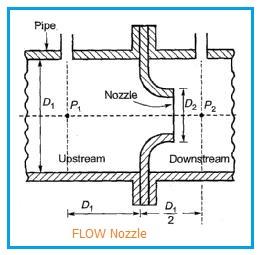
A flow nozzle is a type of differential pressure flow meter, similar to a venturi meter, but without the diverging cone section. Unlike an orifice plate, it features a curved inlet that reduces jet contraction. This design characteristic impacts its performance and applications.
Advertisement
Related Posts
Measurements
/Flow
Explore the benefits and drawbacks of using orifice plates for flow measurement, including cost, size, accuracy, sensitivity, and head loss.
Measurements
/Flow
This article compares Venturi and Orifice meters, two differential pressure flow measurement devices, highlighting their principles, differences, and applications.
Measurements
/Flow
Explore the pros and cons of differential pressure flowmeters, a common technology for measuring fluid flow rates. Learn about their versatility and limitations.
Measurements
/Flow
This article compares swirl and vortex flowmeters, highlighting their operating principles, accuracy, and suitability for different applications.
Advertisement
Measurements
/Flow
Explore the benefits and drawbacks of swirl flowmeters, detailing their operating principle, accuracy, and limitations in measuring liquids, gases, and steam.
Measurements
/Flow
This article explores the benefits and drawbacks of thermal mass flowmeters, detailing their operating principle and key features.