
Equipments
/Electronics
Explore the differences between Digital Storage Oscilloscopes (DSO), Digital Phosphor Oscilloscopes (DPO), and Digital Sampling Oscilloscopes, and their specific applications.
2 min read
Advertisement
Table of Contents
This article explores the advantages and disadvantages of oscilloscopes, both analog and digital. We’ll cover their benefits and drawbacks, helping you understand which type might be best for your needs.
An oscilloscope is an essential instrument for anyone working with electronics. It allows us to visualize voltage waveforms over time on a screen. By using a probe, you can connect the oscilloscope to a test point in a circuit and see how the voltage changes. Oscilloscopes are generally categorized into two types: analog and digital.
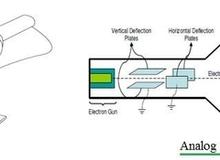
These work with continuously variable voltages, displaying the waveform directly as it changes. This voltage is displayed on the oscilloscope screen as a two-dimensional graph, with time on the x-axis and voltage on the y-axis.
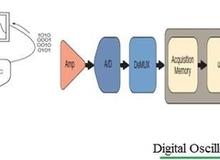
These convert analog waveforms into digital representations using an Analog-to-Digital Converter (ADC). The digital data, consisting of 1s and 0s, is then used to display the waveform.
In summary, while analog oscilloscopes are simpler and more affordable, digital oscilloscopes provide much greater functionality and flexibility for analyzing a wide range of signals. Your specific needs and budget will determine which type is the better fit for your applications.
Advertisement
Related Posts
Equipments
/Electronics
Explore the differences between Digital Storage Oscilloscopes (DSO), Digital Phosphor Oscilloscopes (DPO), and Digital Sampling Oscilloscopes, and their specific applications.
Articles
/General
Explore the fundamental differences between analog and digital oscilloscopes, focusing on their operational principles and display methods.
Articles
/Electronics
Explore the core differences between oscilloscopes and logic analyzers, highlighting their distinct uses and applications in electronic circuit analysis.
Equipments
/Electronics
An overview of the Tektronix TBS1052B oscilloscope, including features, specifications, and comparisons to other brands and types of oscilloscopes.
Advertisement
Articles
/Electronics
Explore the benefits and drawbacks of using logic analyzers for digital circuit analysis, including multi-channel measurement, cost-effectiveness, and limitations in analog signal analysis.