
Measurements
/General
Explore the principles of gravity control in measuring instruments, examining its benefits and limitations, including cost-effectiveness, temperature stability, and constraints on vertical operation.
3 min read
Advertisement
Table of Contents
When it comes to controlling the movement of indicating instruments, two common methods stand out: spring control and gravity control. Both aim to provide a restoring force that counteracts the force causing the instrument’s deflection, ultimately allowing for accurate measurements. But they achieve this in quite different ways. Let’s delve into the specifics of each.
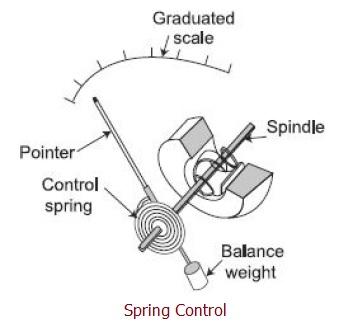 Figure 1: Schematic arrangement of spring control
Spring control, as the name suggests, utilizes a hairspring to exert a controlling force. Typically crafted from phosphor-bronze, this spring is meticulously connected to the moving part of the instrument. Its role is to provide a torque that resists deflection, ensuring the pointer returns to a stable position when the measuring force is removed.
Here are a few things to keep in mind about spring control:
The controlling torque in spring control is defined by this equation:
Tc = (E _ b _ t^3^ / 12 _ L) _ θ
Where:
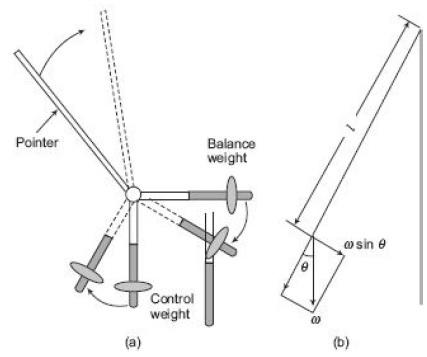 Figure 2: Arrangement for gravity control
Gravity control relies on the force of gravity to create a restoring torque. In this method, a small weight is attached to the moving system. The design ensures that when the system is deflected, gravity produces a controlling torque, pulling the system back towards its original position.
Key points about gravity control:
The controlling torque in gravity control is expressed as:
Tc = w _ l _ sin(θ)
Where:
In essence, while both spring control and gravity control fulfill the same function of providing a restoring torque in indicating instruments, they do so in fundamentally different ways. Spring control relies on the mechanical properties of a coiled spring, whereas gravity control leverages the ever-present force of gravity. These differences impact the design, application, and suitability of each method in various instruments.
Advertisement
Related Posts
Measurements
/General
Explore the principles of gravity control in measuring instruments, examining its benefits and limitations, including cost-effectiveness, temperature stability, and constraints on vertical operation.
Articles
/General
An overview of spring control mechanisms, including their advantages such as portability and uniform scales, as well as disadvantages like temperature sensitivity and limited adjustability.
Terminology
/General
This article explains the three essential torques in analog meters: deflecting, controlling, and damping. It describes their functions and methods of implementation.
Advertisement