
Terminology
/General
This article explains lux (illuminance), its relationship to lumens and footcandles, and provides recommended light levels for different environments.
2 min read
Advertisement
Table of Contents
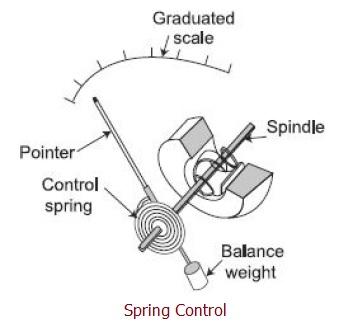
This article explores the ins and outs of spring control mechanisms, outlining their benefits and drawbacks. Let’s dive in!
At its core, spring control utilizes a pair of carefully crafted springs, typically made from phosphor bronze, to manage the movement of a device’s moving parts. Here’s a breakdown:
Advertisement
Related Posts
Terminology
/General
This article explains lux (illuminance), its relationship to lumens and footcandles, and provides recommended light levels for different environments.
Terminology
/General
Understand the difference between depreciation and reflection factors in lighting design and how they impact light levels and efficiency.
Terminology
/General
Explore the fundamentals of BGA packaging, including PBGA, CPBGA, CBGA, and TBGA types. Learn about their features, advantages, disadvantages, and applications.
Equipments
/Wireless
Overview of WLAN test equipment including RF testers (VSG, VSA) and protocol analyzers for conformance and pre-certification testing.
Advertisement
Measurements
/General
Explore the principles of gravity control in measuring instruments, examining its benefits and limitations, including cost-effectiveness, temperature stability, and constraints on vertical operation.
Terminology
/General
A comparison of spring and gravity control methods for restoring torque in indicating instruments, highlighting their mechanisms and differences.