
Articles
/General
Explore the key differences between Quality Assurance (QA) and Quality Control (QC) in software development, highlighting their distinct roles and approaches to quality management.
3 min read
Advertisement
Table of Contents
This article explores the differences between Quality Assurance (QA) and Quality Control (QC), two crucial components of a robust Quality Management System (QMS). We’ll delve into their definitions and examine how they contribute to overall quality.
As outlined by ISO standards, every organization should implement a Quality Management System (QMS) to ensure that quality processes are consistently followed. A QMS encompasses various elements, including:
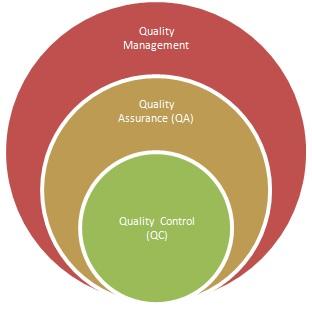
There are seven key quality management principles: customer focus, leadership, people engagement, a process-oriented approach, continuous improvement, data-driven decision making, and relationship management.
Quality Assurance (QA) focuses on establishing quality within the processes used to develop products.
The primary goal of QA is to create processes that prevent defects from occurring during product development. It’s about building quality into the system, not just checking it at the end.
Quality Control (QC) concentrates on ensuring quality in the products themselves. QC activities focus on identifying defects in the actual products once they’ve been made.
QC identifies defects in products before they are released or while still in the production phase. It acts as a final check to catch issues.
The following table highlights the core differences between Quality Assurance and Quality Control:
| Features | Quality Assurance (QA) | Quality Control (QC) |
|---|---|---|
| What is it? | Prevention of quality problems through planned, systematic activities and documentation. | The activities or techniques used to achieve and maintain the product quality, process, and service. |
| As a tool. | It is a managerial tool. | It is a corrective tool. |
| Orientation | QA is process oriented. | QC is product oriented. |
| Who is responsible? | Everyone on the team involved in developing the product. | Specific team(s) test the product for defects. |
| Activities/Processes | Prevent Bug, Plan, and Verify are QA activities. | Detect Bug, Act, and Validate are QC activities. |
| Example | Prevent defects due to quality audits. | Finds defects during testing. |
In essence, QA is proactive, aiming to prevent defects from occurring in the first place. QC is reactive, focusing on finding and addressing defects that already exist. Both are vital for maintaining high quality, and a balanced approach is necessary for success.
Advertisement
Related Posts
Articles
/General
Explore the key differences between Quality Assurance (QA) and Quality Control (QC) in software development, highlighting their distinct roles and approaches to quality management.
Terminology
/General
This article explains lux (illuminance), its relationship to lumens and footcandles, and provides recommended light levels for different environments.
Terminology
/General
Understand the difference between depreciation and reflection factors in lighting design and how they impact light levels and efficiency.
Articles
/General
An overview of spring control mechanisms, including their advantages such as portability and uniform scales, as well as disadvantages like temperature sensitivity and limited adjustability.
Advertisement
Terminology
/General
Explore the fundamentals of BGA packaging, including PBGA, CPBGA, CBGA, and TBGA types. Learn about their features, advantages, disadvantages, and applications.
Equipments
/RF
Explore RF frequency counters, their block diagrams, down-conversion techniques for microwave frequencies, and key specifications for selection.