
Equipments
/Electronics
An overview of LED and luminaire test equipment, covering measurements, manufacturers, and key parameters. Essential for ensuring product quality and reliability.
2 min read
Advertisement
Table of Contents
Thermal performance is absolutely crucial in the design of any lighting system. A well-designed system that manages heat effectively not only boasts higher efficacy, meaning it produces more light with less energy, but also ensures long-term reliability. Let’s delve into the concept of LED thermal resistance.
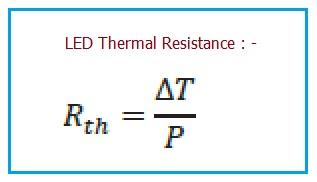
The thermal resistance of an LED is a measure of how well it can dissipate heat. It’s essentially the opposition to heat flow within the device. It’s defined as the ratio of the change in the device’s temperature (ΔT) to the applied electrical power (P).
Think of it like this: the higher the thermal resistance, the harder it is for heat to escape from the LED, and the hotter it will get.
The LED thermal resistance is represented by the following equation:
Rth = ΔT / P
Where:
A particularly useful thermal resistance to consider is the junction-to-case thermal resistance (Rth J-C). This value tells us how well heat is transferred from the LED die (the light-emitting part) to the package case. This is crucial because the case is often where the heat is then transferred to a heatsink.
Here’s a breakdown:
The lower the junction-to-case thermal resistance, the more easily the heat can move away from the die and into the heatsink, resulting in a cooler and more efficient LED. In essence, a low Rth J-C is a key to a long lasting and reliable LED lighting system.
Advertisement
Related Posts
Equipments
/Electronics
An overview of LED and luminaire test equipment, covering measurements, manufacturers, and key parameters. Essential for ensuring product quality and reliability.
Terminology
/General
Explore the Seebeck, Peltier, and Thomson effects, fundamental thermoelectric phenomena underlying thermocouples and other applications.
Calculators
/General
Learn about the Temperature Coefficient of Resistance with a calculator and formula explanation. Understand how material resistance changes with temperature.
Terminology
/General
This article explains resistivity and resistance, detailing how they impact electrical flow. Includes a table with resistivity values for various materials.
Advertisement
Measurements
/Electronics
This article explores the key parameters and testing methods used to evaluate the performance of LEDs, including voltage, current, and light output.
Articles
/Lighting
A brief overview of key organizations (IEC, UL, ANSI, IESNA, NEMA, BEE, EU) and their respective standards governing LED testing.