
Terminology
/General
Understanding the differences between dry bulb temperature, air temperature, and dew point, and how they relate to humidity.
3 min read
Advertisement
Table of Contents
This article explores the concepts of dry bulb temperature and wet bulb temperature, two key measurements used to understand the moisture content of air. Both temperatures are measured using thermometers, but they reveal different aspects of the air’s condition. These measurements are crucial in determining relative humidity, a critical factor in various fields, from meteorology to HVAC (Heating, Ventilation, and Air Conditioning).
Before diving into the specifics of dry and wet bulb temperatures, let’s quickly review how humidity can be measured. There are several methods:
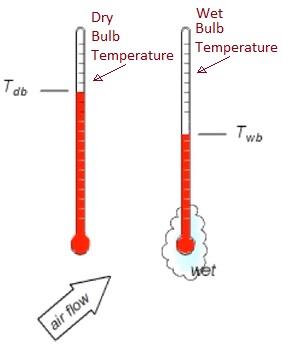
| Feature | Dry Bulb Temperature (T | Wet Bulb Temperature (T |
|---|---|---|
| Measurement | Standard thermometer exposed to air | Thermometer with a wet cloth covering the bulb |
| Reading | Temperature of the air itself | Temperature lowered by evaporative cooling |
| Relationship | Usually higher than or equal to wet bulb temperature | Usually lower than dry bulb temperature, equal at 100% RH |
| Primary Use | Basic air temperature measurement | Indicates moisture content of the air and can be used to calculate RH |
Advertisement
Related Posts
Terminology
/General
Understanding the differences between dry bulb temperature, air temperature, and dew point, and how they relate to humidity.
Articles
/Measurements
Learn how to use a relative humidity table or chart to determine the relative humidity based on dry and wet bulb temperatures.
Articles
/General
This article clarifies the differences between absolute, specific, and relative humidity, explaining their definitions, formulas, and key characteristics.
Terminology
/General
Explore the differences between resistive and capacitive hygrometers, including their working principles and construction.
Advertisement