
Terminology
/General
This article compares mechanical and electrical tachometers, focusing on their operating principles, components, and differences in accuracy and maintenance.
2 min read
Advertisement
Table of Contents
This page explains what a tachometer is and how it’s used to measure the angular velocity of a motor. We’ll also explore its benefits and popular Tachometer manufacturers and vendors.
A tachometer is an instrument designed to measure the angular velocity of rotating objects, most commonly motor shafts. The measurement is typically displayed in RPM (revolutions per minute). Essentially, it determines the number of complete rotations within a specified time period.
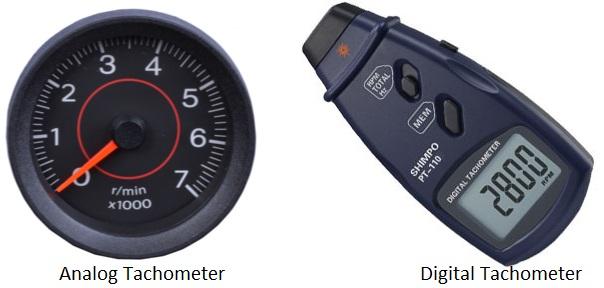
Tachometers generally fall into two main categories:
Both analog and digital tachometers rely on either an electrical or mechanical connection to the rotating object being measured. There are also tachometers that function using optical principles.
Here are some well-known manufacturers and vendors that offer tachometers:
Following are some of the advantages of Tachometer.
A tachometer is an essential instrument for monitoring rotational speed, ensuring efficient operation, preventing mechanical failures, and improving safety in various industries. Its accuracy and real-time feedback make it invaluable for performance optimization and maintenance.
Advertisement
Related Posts
Terminology
/General
This article compares mechanical and electrical tachometers, focusing on their operating principles, components, and differences in accuracy and maintenance.
Articles
/Measurements
Explore the differences between DC and AC tachometer generators, including their construction, speed measurement techniques, and application suitability.
Articles
/General
Explore the differences between accelerometers and gyroscopes, their functions, and applications in modern devices. Learn about their unique measurements.
Terminology
/General
Explore the benefits and limitations of electrical instruments, including non-contact measurements, low power consumption, and reliance on mechanical movement.
Advertisement
Equipments
/Avionics
Explore the functionality and applications of air flow meters (anemometers), specifically focusing on the MECO 961P model and its features.
Measurements
/Flow
Explore the working principle, benefits, and drawbacks of turbine flowmeters used for fluid flow rate measurement.