
Articles
/General
This article explores the advantages and disadvantages of various types of altimeters, including pressure, sonic, radar, and GPS-based models.
3 min read
Advertisement
Table of Contents
The equipment used to measure the altitude of an object above a fixed level (i.e., sea level) is known as an Altimeter. A major application is determining the height of an airplane flying above the earth to avoid obstacles such as mountains and other airplanes. Moreover, it’s advisable to fly at a high altitude due to the thinner air, which requires less fuel as it asserts less resistance. This optimal region can be found by knowing the altitude level. The Altimeter is used to measure altitude and is widely used in the avionics domain. This page explores methods to measure altitude, vendors and benefits of altitude indicator.
There are two main methods to measure altitude:
Method 1: Measure air pressure and determine altitude from this.
This method relies on the principle that air pressure decreases with increasing altitude. By measuring the air pressure surrounding the aircraft, the altimeter can calculate the corresponding altitude.
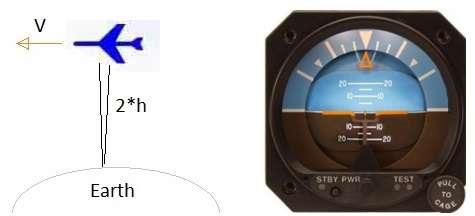
Method 2: Transmit a radio frequency wave from the airplane towards the earth and measure the round trip time.
We know that radio waves travel at the speed of light (approximately 3 x 10^8 m/sec). By measuring the time it takes for the radio wave to travel to the ground and back, we can calculate the distance, which gives us the height of the airplane above the earth. The figure above visually explains this concept.
The most common altimeters used in avionics are known as aneroid barometers. They display height by measuring pressure. This type of altimeter uses a hollow box that expands and contracts based on pressure decrease and increase. This movement consecutively moves the pointer based on the change in air pressure.
The following are some of the vendors of altimeters or altitude indicators:
Following are some of the advantages of altimeter.
The altitude indicator (altimeter) is a vital instrument across aviation, meteorology and outdoor activities, ensuring accurate altitude measurement for safety and efficiency. In aviation, it helps pilots maintain proper flight levels, aids in collision avoidance, and supports instrument based navigation. Beyond aviation, it plays a crucial role in weather monitoring, adventure sports and drone operations. With advancements in technology, modern altimeters offer improved precision and integration with GPS and digital systems. Whether in aircraft, space missions or mountaineering, the altitude indicator remains indispensable for accurate altitude tracking and operational success.
Advertisement
Related Posts
Articles
/General
This article explores the advantages and disadvantages of various types of altimeters, including pressure, sonic, radar, and GPS-based models.
Equipments
/Avionics
The TR-220 is a multi-functional test set used for testing avionics systems like TCAS, DME, ADS-B, and transponders. Key features include comprehensive DME support and RS232 connectivity.
Equipments
/Avionics
Learn about the directional gyroscope (DG), its working principles, uses in aviation, and key vendors. Understand how it provides a stable heading reference independent of the Earth's magnetic field.
Equipments
/Avionics
Explore the functionality and applications of air flow meters (anemometers), specifically focusing on the MECO 961P model and its features.
Advertisement
Equipments
/Electronics
Learn about sound level meters (SLMs), their types (integrating, Class 1/2, Type 0/1/2), applications, and leading manufacturers in the industry.