
Equipments
/RF
Learn the basics of PIM (Passive Intermodulation) testing, including PIM analyzer types, features, and popular equipment from Anritsu and other vendors.
2 min read
Advertisement
Table of Contents
This article explores the advantages and disadvantages of using a PIM (Passive Intermodulation) Analyzer. We’ll cover its benefits and drawbacks, helping you understand its role in RF and microwave testing.
PIM, or Passive Intermodulation, refers to the unwanted generation of signals when two or more frequencies interact within a passive component. These unwanted signals can interfere with desired communications. A PIM analyzer is a device designed to measure and identify these intermodulation products, helping ensure compliance with industry standards like IEC 62037.
PIM analyzers can perform a variety of measurements, including:
These analyzers are commonly used to certify cables and antennas, but they can also perform other RF and microwave measurements such as return loss, VSWR, cable loss, distance to fault, and 1-port phase.
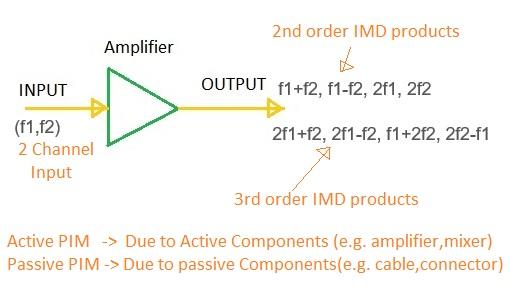 Figure 1: Illustration of PIM products generated due to active and passive components in a microwave circuit.
PIM analyzers are essential tools for ensuring the performance and reliability of RF and microwave systems. Their portability, comprehensive testing capabilities, and support for modern standards make them a valuable asset. While there are a few drawbacks, mainly concerning product-specific limitations and cost, the advantages generally outweigh the disadvantages. When choosing a PIM analyzer, it’s crucial to consider your specific requirements and budget to find the best fit for your needs.
Advertisement
Related Posts
Equipments
/RF
Learn the basics of PIM (Passive Intermodulation) testing, including PIM analyzer types, features, and popular equipment from Anritsu and other vendors.
Equipments
/RF
A comparative analysis of spectrum analyzers from Keysight, Tektronix, and Rigol, highlighting key specifications and features for RF applications.
Measurements
/RF
A guide to RF coupler testing, covering key parameters like coupling, directivity, insertion loss, and test setups. Learn how to measure these specifications.
Terminology
/General
Explore the benefits and limitations of electrical instruments, including non-contact measurements, low power consumption, and reliance on mechanical movement.
Advertisement