
Articles
/Manufacturing
Explore the distinctions between soldering and brazing, two metal joining techniques, including differences in filler materials, temperature, strength, and common applications.
3 min read
Advertisement
Table of Contents
This article explores the differences between prisms and gratings, two common optical components used to manipulate light. Both prisms and gratings are capable of dispersing light, meaning they separate white light into its constituent colors. However, they achieve this through different mechanisms and have distinct characteristics, making them suitable for different applications.
Let’s take a look at how they appear:
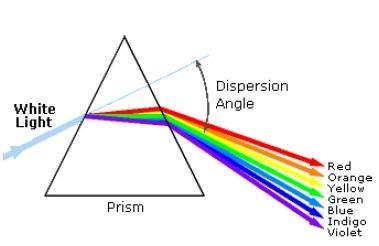
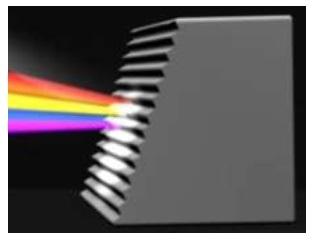
Here’s a breakdown of their key differences, presented in a more readable format:
| Feature | Prism | Grating |
|---|---|---|
| Material | Typically made of Quartz, Calcite, or Glass. | Made of aluminum or materials with a bright surface; contains 2,500 to 60,000 lines per inch. |
| Operating Wavelength | Operates effectively in the 400 to 1000 nm region. | Operates effectively in the 200 to 800 nm region. |
| Spectrum Purity | Produces a spectrum that is not as pure compared to a grating. | Produces a spectrum that is significantly purer than a prism’s spectrum. |
| Ray Bandwidth | Can acquire a ray band of 10 to 25 nm. | Can acquire a ray band of about 5 nm. |
| Dispersion Sharpness | Dispersion of light is not particularly sharp. | Dispersion of light is very sharp and well-defined. |
| Dispersion Extension | The light dispersion ability cannot be easily extended. | The dispersion ability can be extended by increasing the number of lines per inch on the grating. |
| Ghost Spectrum | Does not produce a ghost spectrum. | Can produce a ghost spectrum if the lines on the grating are not perfectly uniform. |
Material and Construction: Prisms rely on refraction, the bending of light as it passes through different materials. They are typically solid pieces of transparent material. Gratings, on the other hand, use diffraction, the bending of light as it passes through a series of narrow slits or lines. This is why they are created with a reflective surface etched with precise lines.
Spectrum Purity and Bandwidth: Because of the way they disperse light, gratings produce a much cleaner and sharper spectrum. This makes them ideal for applications requiring precise analysis of wavelengths. Additionally, gratings offer a narrower ray band, meaning they can isolate a specific color range of light more effectively.
Dispersion Control: While a prism’s dispersive power is fixed, a grating’s can be fine-tuned by changing the line density. This makes them more versatile in applications where high resolution is needed.
Ghost Spectrum: The ghost spectrum is an artifact that can appear with imperfect gratings. It is a false image of the spectrum and can impact precision measurements. This is not a problem with prisms.
Both prisms and gratings are valuable tools in optics. Prisms are simpler and more robust in some contexts, while gratings offer superior spectral purity and flexibility in dispersion control. The choice between them depends on the specific requirements of the application, including the desired wavelength range, spectral purity, and budget.
Advertisement
Related Posts
Articles
/Manufacturing
Explore the distinctions between soldering and brazing, two metal joining techniques, including differences in filler materials, temperature, strength, and common applications.
Articles
/Measurements
Explore the differences between colorimeters and spectrophotometers, their working principles, and when to use each.
Equipments
/Optics
Explore the pros and cons of single, double, and split beam spectrophotometers. Learn how each type’s design affects its performance and suitability for different applications.
Terminology
/General
Explore the distinct functions and applications of radiometers, spectrometers, and spectroradiometers in light measurement.
Advertisement
Equipments
/Electronics
An overview of spectrophotometers and spectrometers, their applications, key features, and vendors.
Articles
/General
Explore the differences between X-ray Fluorescence (XRF) and X-ray Diffraction (XRD) for material analysis. Learn how they provide complementary information.